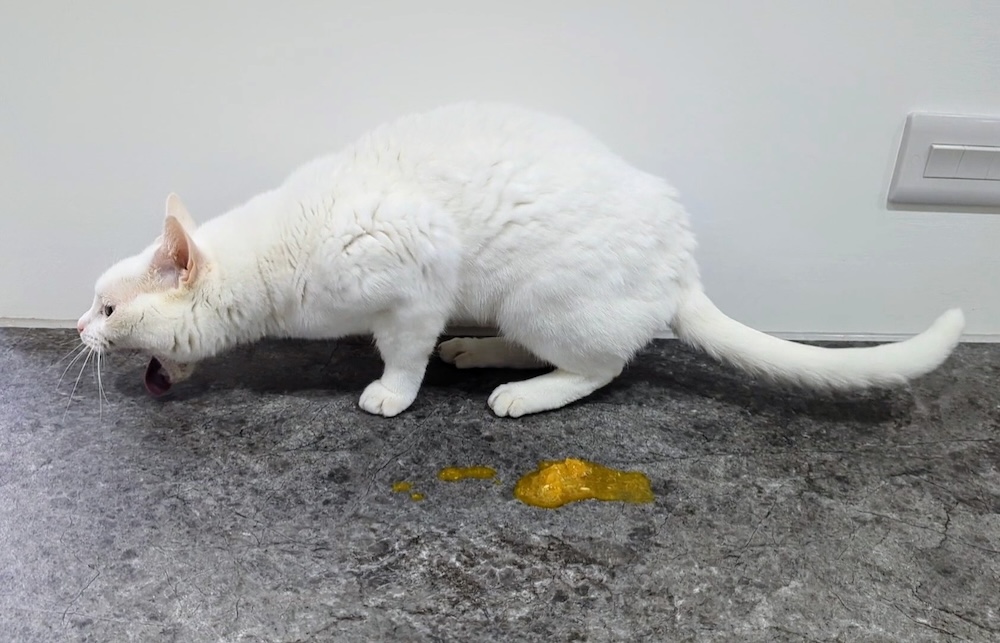

That’s why we tracked down and created reviews of the best cat foods for cats with IBD. Your cat can get the nutrition they need without the uncomfortable and often painful IBD flare-ups.
We also developed a comprehensive buyer’s guide to walk you through everything you need to know to get the right food the first time. The good news is that you don’t necessarily need to spend much money on a new diet!
Disclaimer: The foods reviewed here were chosen because they have certain characteristics that might help with some of the causes or consequences of this medical condition. However, they are not a medical treatment or a substitute for medical treatment. Keep in mind that each medical case is different and what works for some pets may not work for others. Your veterinarian is the right person to advise you on the best diet for your pet’s individual case.

A Quick Comparison of Our Favorites in 2024
| Image | Product | Details | ||
|---|---|---|---|---|
Best Overall

|
|
Smalls Cow Recipe (Fresh Cat Food Delivery) |
|
Click to Save 40% Use Code Catster24 |
Budget Buy

|
|
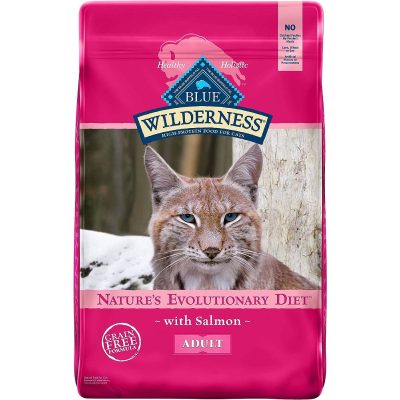
Blue Buffalo Wilderness Salmon |
|
CHECK PRICE |

|
|
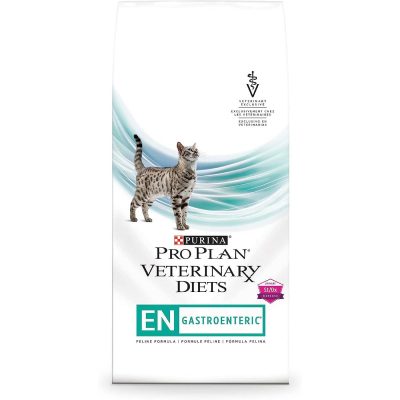
Purina Pro Plan Diets |
|
CHECK PRICE |
|
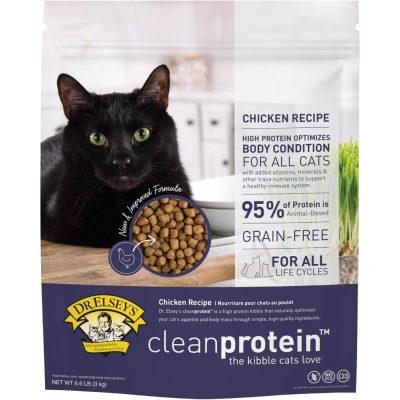
Dr. Elsey's CleanProtein Chicken |
|
CHECK PRICE | |
|
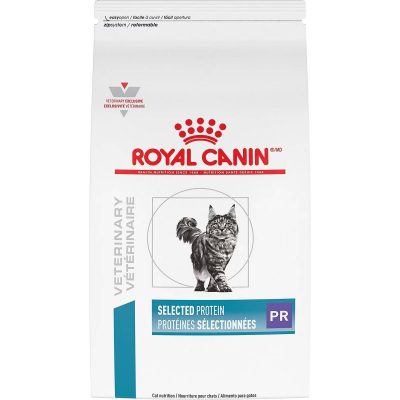
Royal Canin Vete Diet Protein |
|
CHECK PRICE |

The 11 Best Food for Cats With IBD
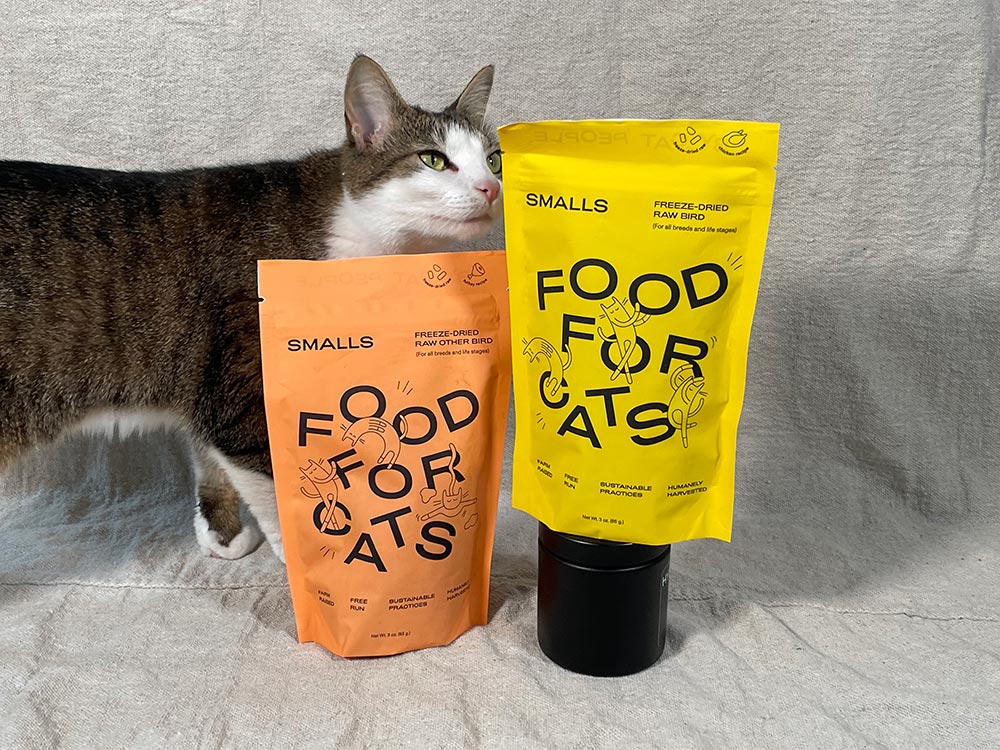
1. Smalls Cow Recipe (Fresh Cat Food Delivery) — Best Overall
| Food type: | Fresh, wet |
| Primary protein: | Beef |
| Crude protein percent: | 33% |
| Size: | 11.5 oz |
Dietary management is one of the best and most conservative ways of treating cats with inflammatory bowel disease (IBD). One of the many causes of feline IBD has to do with food intolerances. That’s where Smalls Fresh Cow Recipe steps up to the plate. Veterinarians often recommend a diet from a single protein source, and this one fits the bill.
Smalls cat food contains lean ground beef, liver, and heart. These provide a healthy amount of the amino acid taurine. The food comes in either a smooth or ground texture that makes it highly digestible for pets that may have gastrointestinal issues.
On the downside, it has a relatively high-fat content. While the protein percentage exceeds the AAFCO’s recommendations, it may be too high if your pet has kidney disease. Our biggest concern is the pea content, which has been associated with a spike in canine dilated cardiomyopathy (DCM) cases. Although more common in dogs, it has been reported in cats.
IBD is a serious and often lifelong condition. Therefore, we strongly urge you to discuss dietary changes with your vet. Regardless, many customers love that the ingredients list is so clean and gets delivered right to your doorstep, making it our choice for the best overall food for cats with IBD.
- Single protein source
- High taurine content
- Minimal number of ingredients
- Delivery to your door
- High-fat content
- Peas are a questionable ingredient for pets
2. Blue Buffalo Wilderness Salmon Recipe — Budget Buy
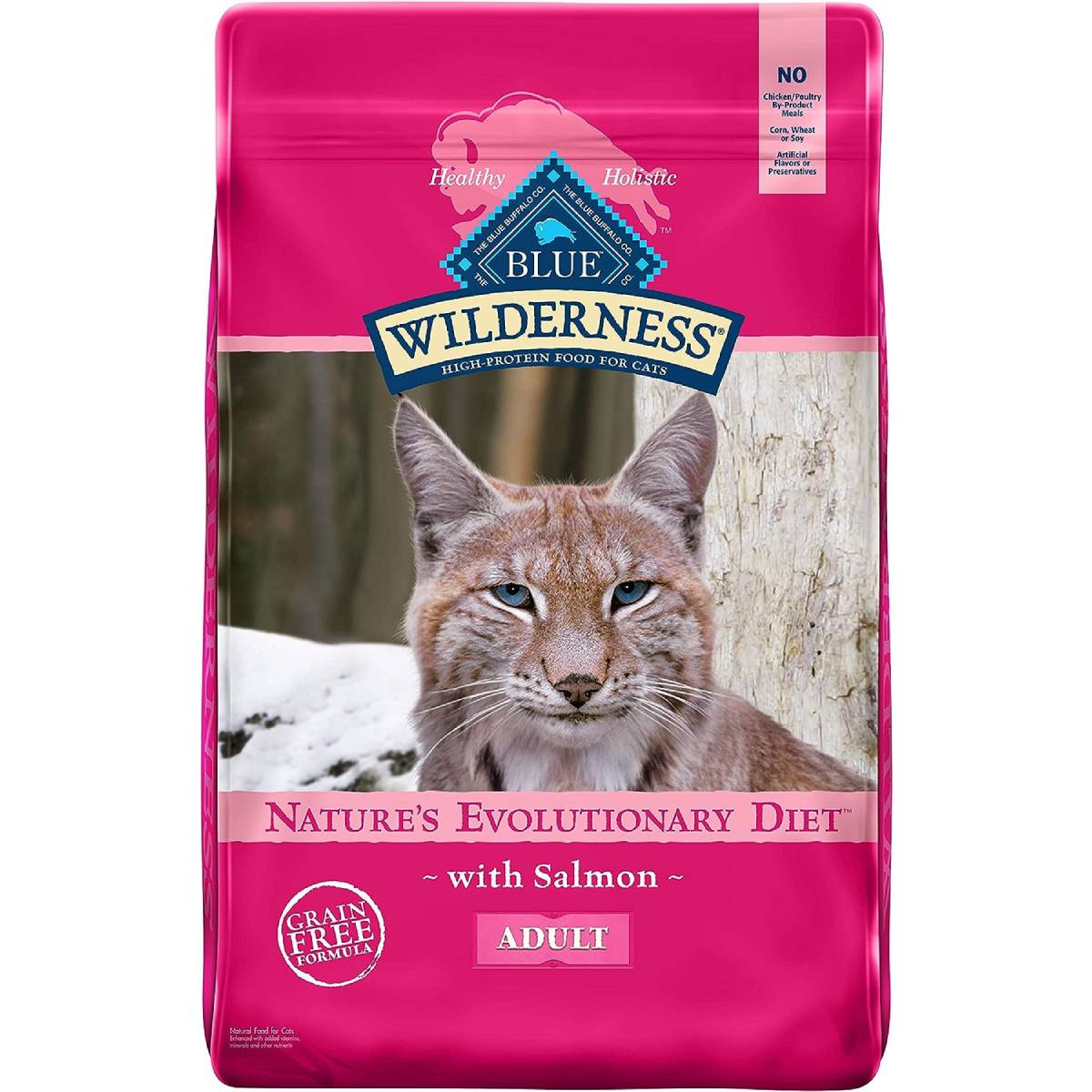
| Food type: | Dry |
| Primary protein: | Salmon |
| Crude protein percent: | 40 |
| Size: | 5 or 11 pounds |
Not everyone can afford prescription cat foods, and not everyone wants to keep up with a prescription for their cat food. That’s when it’s worth trying out a product like Blue Buffalo Wilderness Salmon Recipe. Salmon is a great novel protein for IBD, and it might be all your cat needs to get their IBD under control.
You don’t need a prescription; it’s affordably priced, and it has 40% crude protein. So, not only does it save your bank account (and you) some stress, but it also gives your cat everything that they need to thrive.
So, while Blue Buffalo isn’t formulated for your cat’s gastrointestinal health, its food can often help get it under control for a fraction of the price of other cat foods. It easily earns its place as the best food for cats with IBD for the money.
- Affordable
- No prescription required
- Decent crude protein percent
- Salmon is a good protein for gastrointestinal health
- Not specifically formulated for gastrointestinal health
3. Purina Pro Plan Vet Diet Gastroenteric Formula
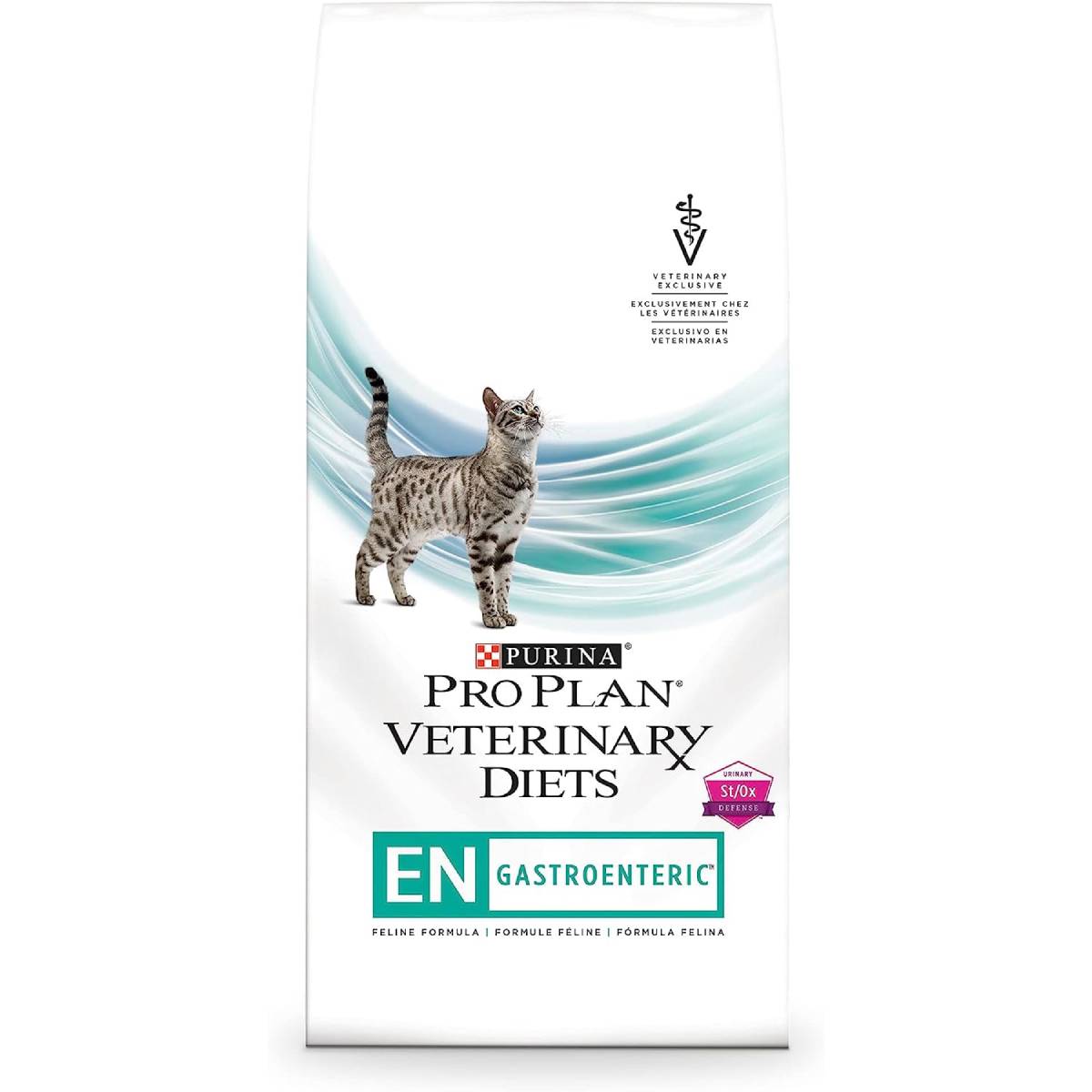
| Food type: | Dry |
| Primary protein: | Poultry |
| Crude protein percent: | 50 |
| Size: | 6 or 10 pounds |
Prescription pet foods are notoriously expensive, but Purina’s Pro Plan Veterinary Diets EN Gastroenteric Formula bucks that trend. You still get all the benefits of a prescription pet food, but you don’t have to deal with the prescription pet food price!
It’s a phenomenal mix of price and nutrition, and it has a minimum of 50% crude protein, which is outstanding for your cat’s health. Moreover, it supports both their gastrointestinal and urinary health, which is a big deal for cats with IBD.
The only downside is that you will need a prescription, but if you reach out to your vet, they shouldn’t have any problem giving you one. With all these perks, it’s not hard to see why it is ideal for cats with IBD.
- A great mix of price and nutrition
- Outstanding protein amount
- Two size options
- Gentle on gastrointestinal health
- Supports urinary health
- Requires prescription
4. Dr. Elsey’s CleanProtein Chicken Formula — Best for Kittens
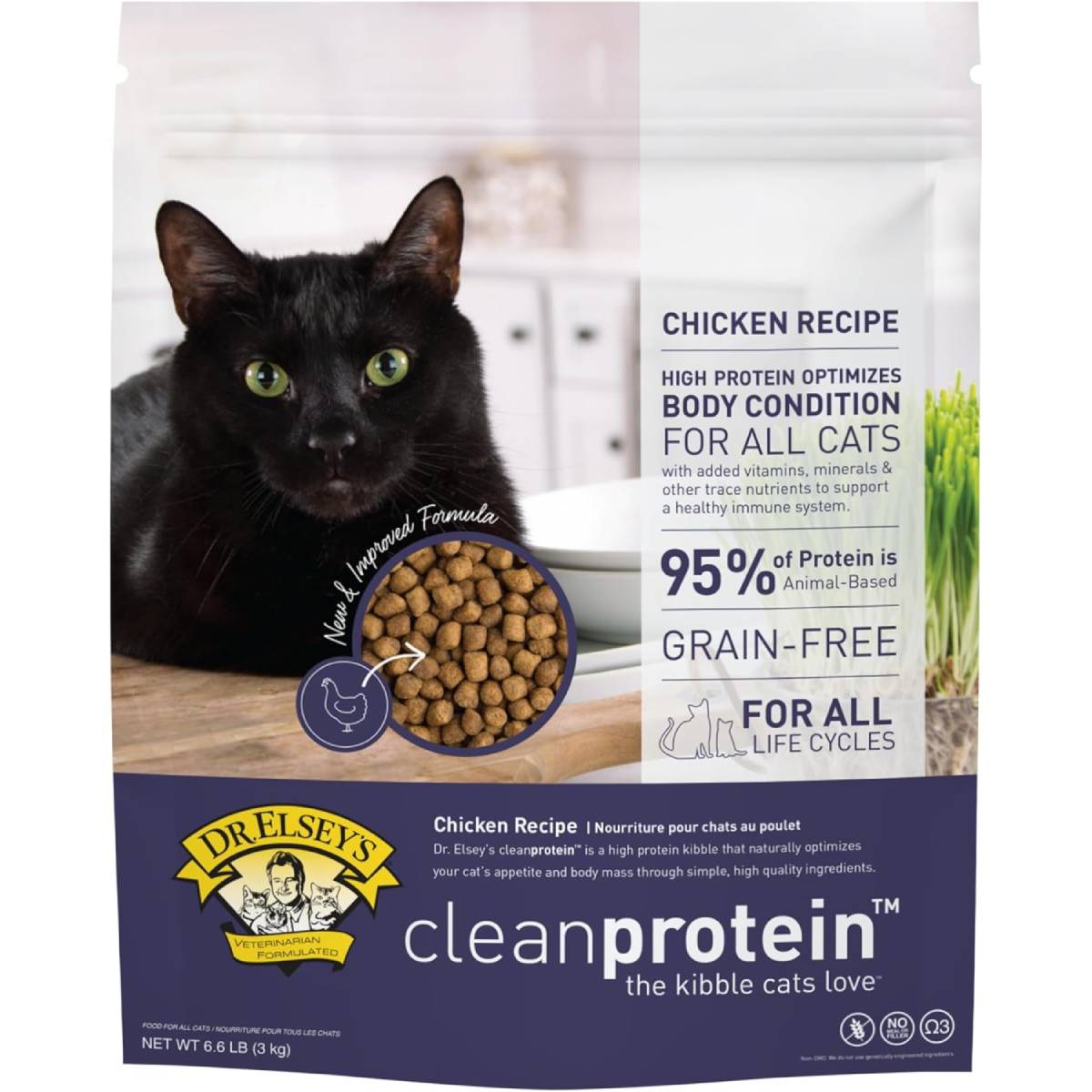
| Food type: | Dry |
| Primary protein: | Chicken |
| Crude protein percent: | 59 |
| Size: | 2 or 6.6 pounds |
Even kittens can have sensitive stomachs. That’s where a product like Dr. Elsey’s CleanProtein Chicken Formula comes in. It has the high protein amount that kittens need to grow and thrive, and it’s available without a prescription.
Additionally, it comes packed with several helpful nutrients. So, while chicken isn’t always the best choice for cats with IBD, if it’s not one of your kitten’s trigger foods, it might be exactly what you’ve been looking for.
Finally, while Dr. Elsey’s might be our top choice for kittens, there’s no reason that you can’t feed them Dr. Elsey’s CleanProtein Chicken Formula as they get older, too. Just ensure they get plenty of exercise to burn off all that protein!
- High protein percent
- No prescription required
- Good mix of price and nutrition
- Contains beneficial nutrients
- Chicken isn’t the best protein choice for IBD
5. Royal Canin Veterinary Diet Selected Protein
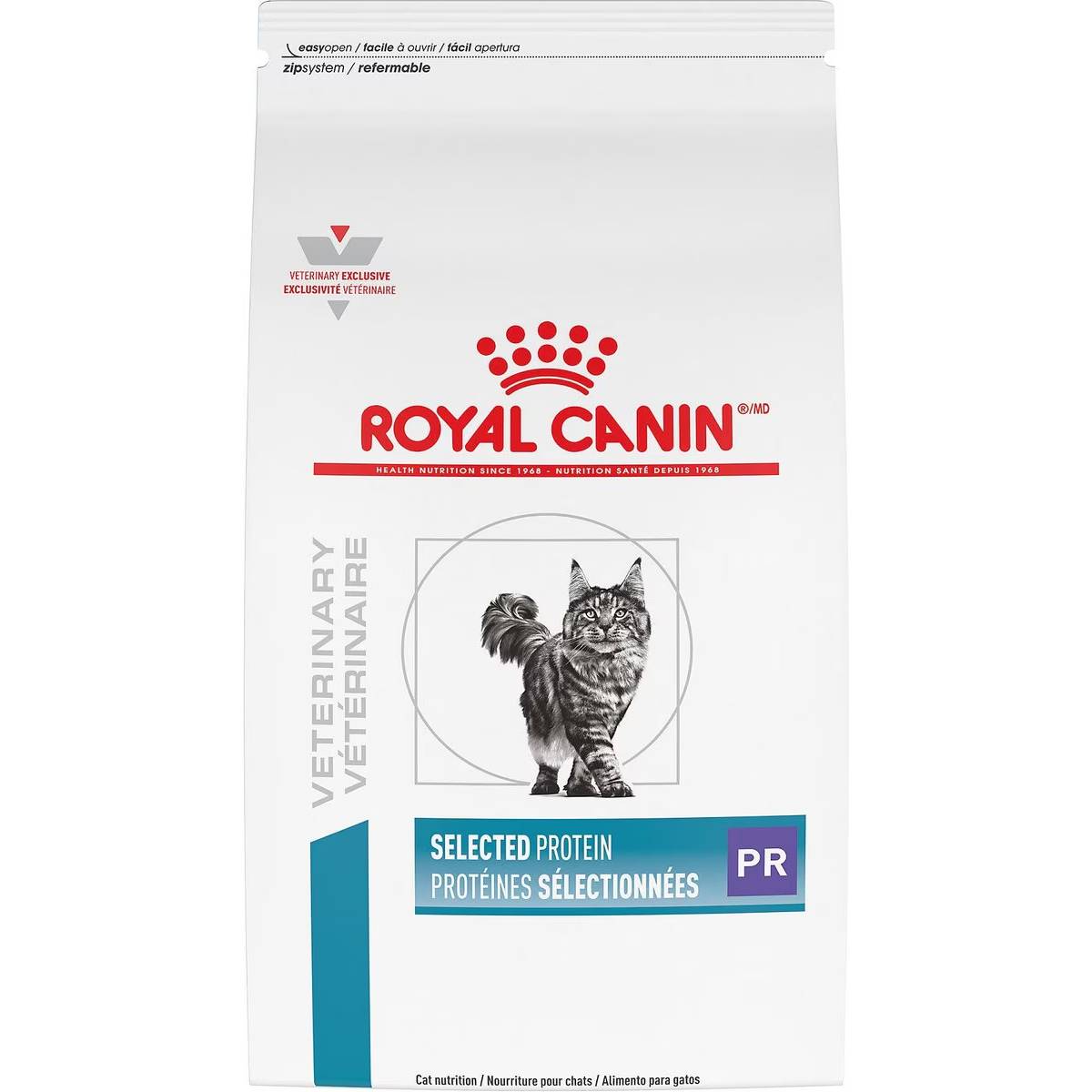
| Food type: | Dry |
| Primary protein: | Rabbit |
| Crude protein percent: | 30 |
| Size: | 8.8 pounds |
Royal Canin and Hill’s Prescription Diet are two of the top names in the prescription pet food industry, and when we stacked them up here, Royal Canin came out ahead. The 30% crude protein is enough to keep your cat healthy, and the 5.7% fiber keeps your cat full while helping their digestion.
Royal Canin Veterinary Diet Selected Protein is formulated to help your cat’s gastrointestinal health, has essential nutrients, and has a limited-ingredient formula that is great for cats with sensitive stomachs. Moreover, the company uses rabbit as its protein source, and it’s a great novel protein for IBD.
It is a pricier option, and you will need a prescription to order it, but if your vet asks you whether you want Royal Canin or Hill’s Prescription Diet, we give a slight edge to Royal Canin.
- Rabbit is a great novel protein
- Decent fiber amount at 5.7%
- Designed for cats with gastrointestinal problems
- Contains essential nutrients
- Limited-ingredient formula
- Requires prescription
- Lower protein amount
- Expensive
6. The Honest Kitchen Turkey Recipe
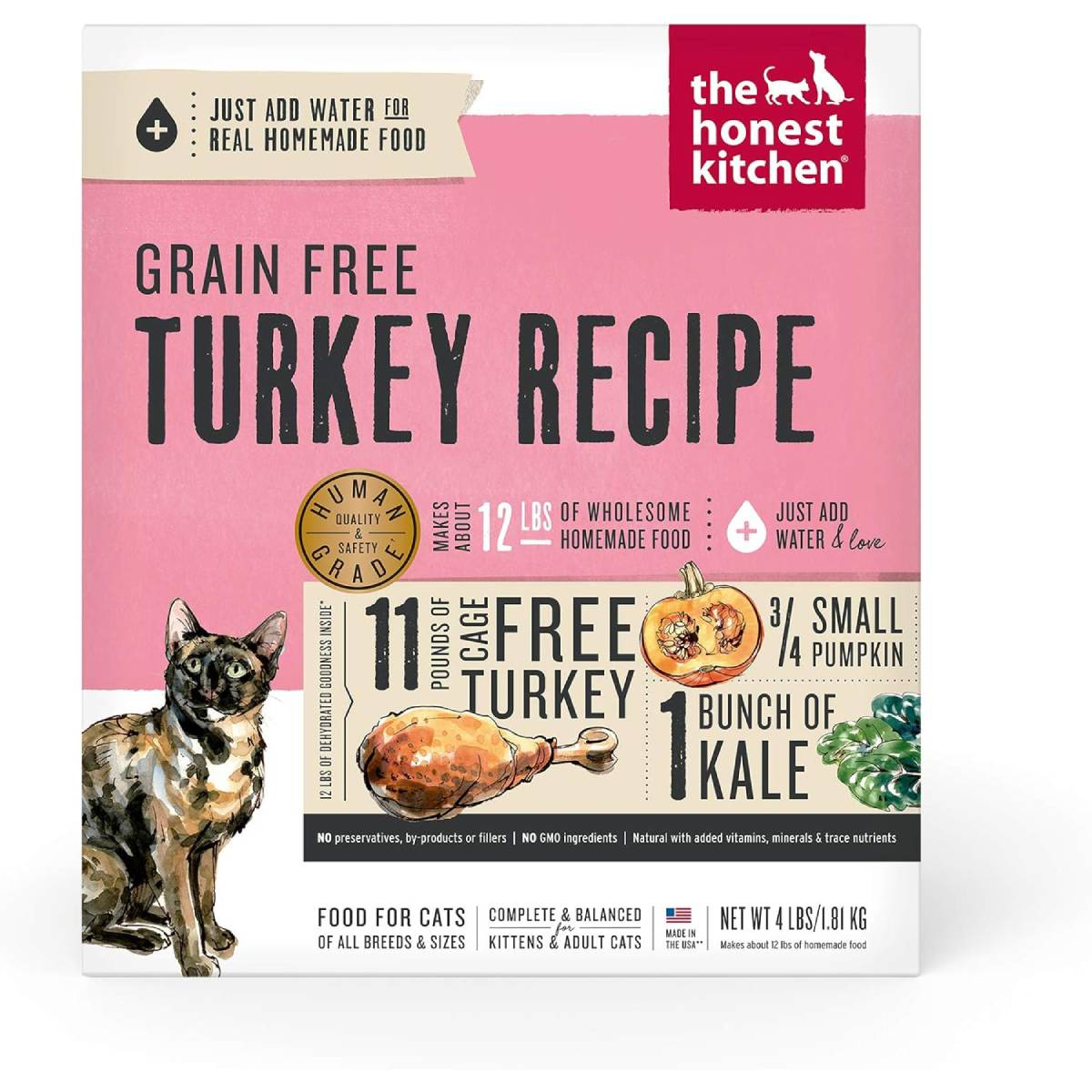
| Food type: | Dehydrated |
| Primary protein: | Turkey |
| Crude protein percent: | 38.5 |
| Size: | 2 or 4 pounds |
If you’re not worried about how much your new cat food will cost, Honest Kitchen’s Turkey Recipe is precisely what you’ve been looking for. You don’t need a prescription, and it’s a high-quality food.
It’s a freeze-dried food, which means it’s much higher quality than a typical dry food. However, that also means it’s far more expensive. The crude protein amount is just under 40%, but that’s still more than the 30% that your cat needs.
Overall, it’s a high-quality cat food, but it has to be within your budget to feed it to your cat meal after meal. But with simple ingredients, it’s often exactly what your cat needs to get their IBD under control.
- No prescription required
- High-quality food
- Decent crude protein amount
- Simple ingredients
- Expensive
7. Hill’s Prescription Diet z/d Skin Food Sensitivities Dry Cat Food
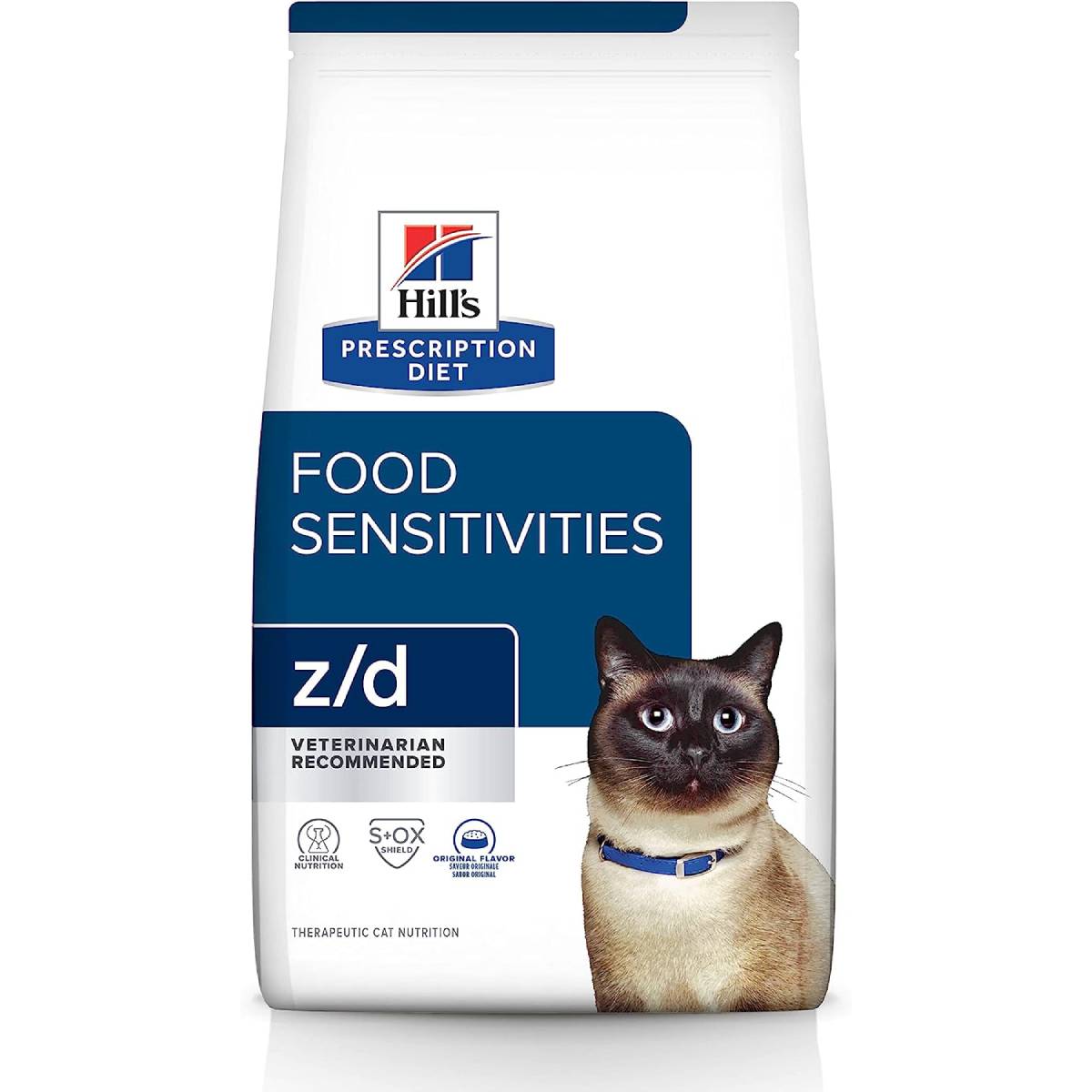
| Food type: | Dry |
| Primary protein: | Chicken liver |
| Crude protein percent: | 29 |
| Size: | 4 or 8.5 pounds |
We don’t think there’s a bigger name in the prescription pet food industry than Hill’s. While it’s undoubtedly a trustworthy brand, it’s worth noting that bigger isn’t always better. First, you need a prescription for the Hill’s Prescription Diet.
While Hill’s is tailored for gastrointestinal health, it’s also expensive. However, the tradeoff is in the high-quality ingredients that are great for your cat’s health. The crude protein amount is a bit low, but the chicken liver is far better for your cat’s IBD than regular chicken.
Furthermore, it contains essential antioxidants, and the fiber percent is more than enough to help your cat’s digestion along. So, while it’s costly, there’s a good chance that it’ll get your cat’s IBD under control.
- Designed for cats with gastrointestinal problems
- Decent fiber amount at 4.5%
- Chicken liver is more digestible than regular chicken
- Antioxidants for improved health
- Low protein amount
- Expensive
- Requires prescription
8. Merrick Limited Ingredient Diet
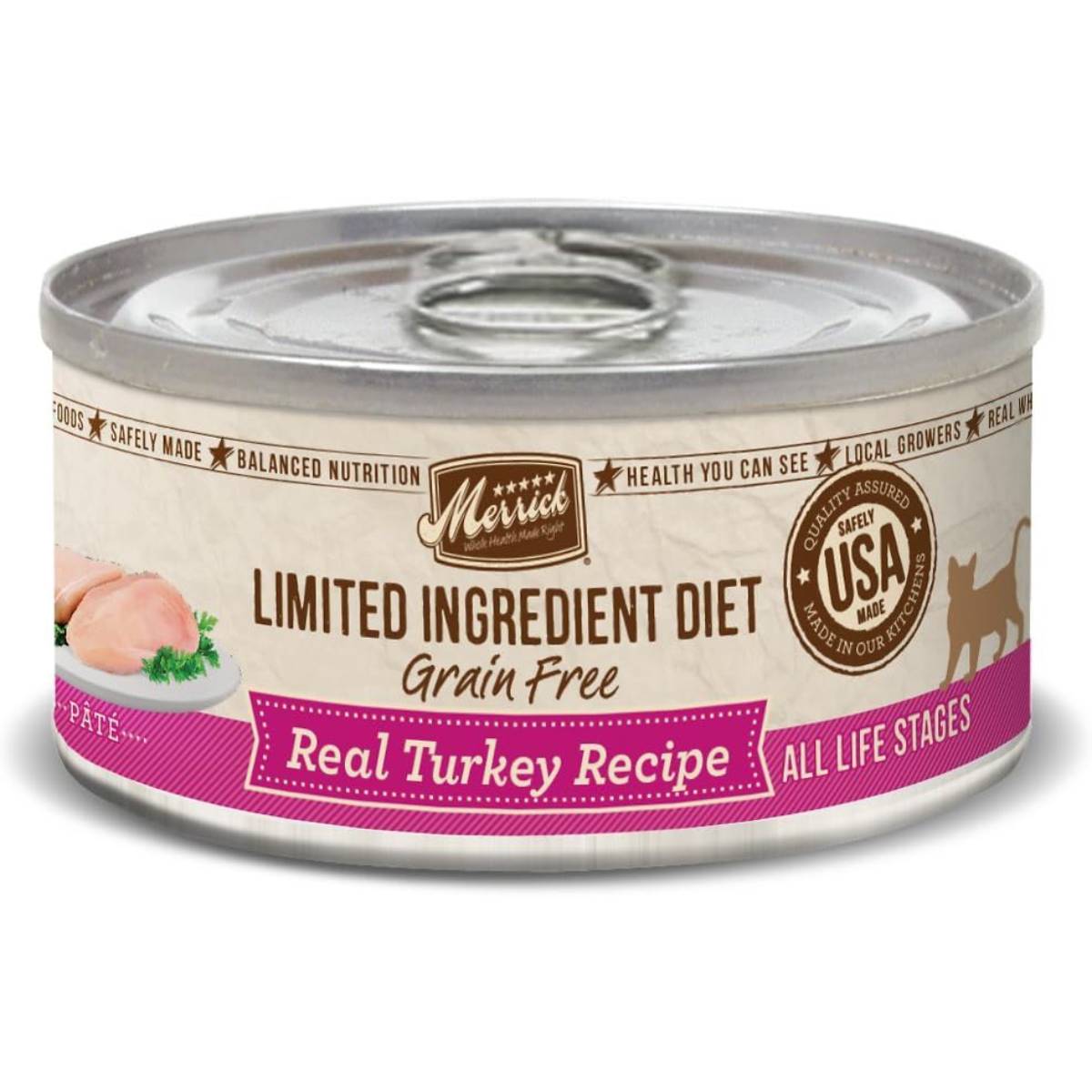
| Food type: | Wet |
| Primary protein: | Turkey |
| Crude protein percent: | 9 |
| Size: | 5-ounce case of 24 |
Some cats do better with wet cat food. Fortunately, there’s a great wet cat food option for cats with IBD in Merrick’s Limited Ingredient Diet. It’s a simple ingredient recipe that can simplify your cat’s diet to help with IBD.
It uses a potato-free recipe with turkey as its novel protein, which most cats respond better to compared to chicken. Since Merrick’s uses a single source of protein in its cat food, it helps simplify everything even more for your cat’s digestive tract.
There are several antioxidants in the food, and it’s great for your cat’s coat. However, keeping your cat on a wet food diet is a little expensive. Most cats require multiple cans daily, which drives up the cost of this already expensive food.
- Potato-free recipe
- Tons of antioxidants
- Single-source protein cat food
- Great for your cat’s coat
- Most cats need multiple cans per day
- Expensive
9. Stella & Chewy’s Absolutely Rabbit Dinner Morsels
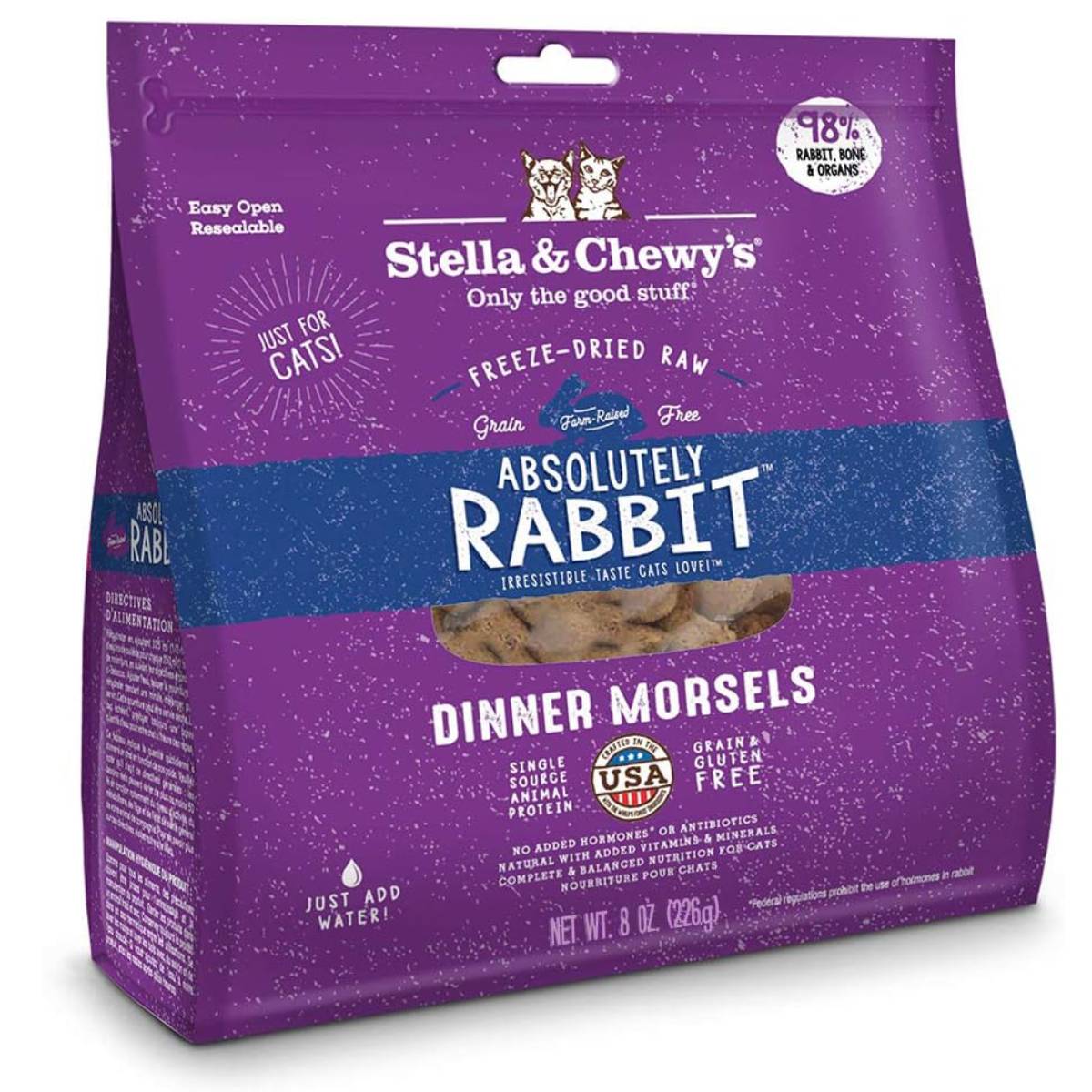
| Food type: | Freeze-dried |
| Primary protein: | Rabbit |
| Crude protein percent: | 44 |
| Size: | 3.5, 8, or 18 ounces |
If you’re trying to tackle your cat’s IBD, one of the best things that you can do is switch them to a simpler diet. That’s precisely what you can do with Stella & Chewy’s Absolutely Rabbit Dinner Morsels. It’s a freeze-dried food with at least 44% protein in every serving!
It’s a simple ingredient recipe that’s great for your cat, and there are multiple sizes available. However, while it does a great job at getting your cat’s IBD under control, it’s also one of the most expensive options for feeding your cat. However, they’ll love every bite, and you’ll be feeding them food that actually looks like food.
- Rabbit is a great novel protein
- High protein percentage
- Multiple size options
- Simple-ingredient recipe
- Expensive
10. Vital Essentials Rabbit Dinner Patties
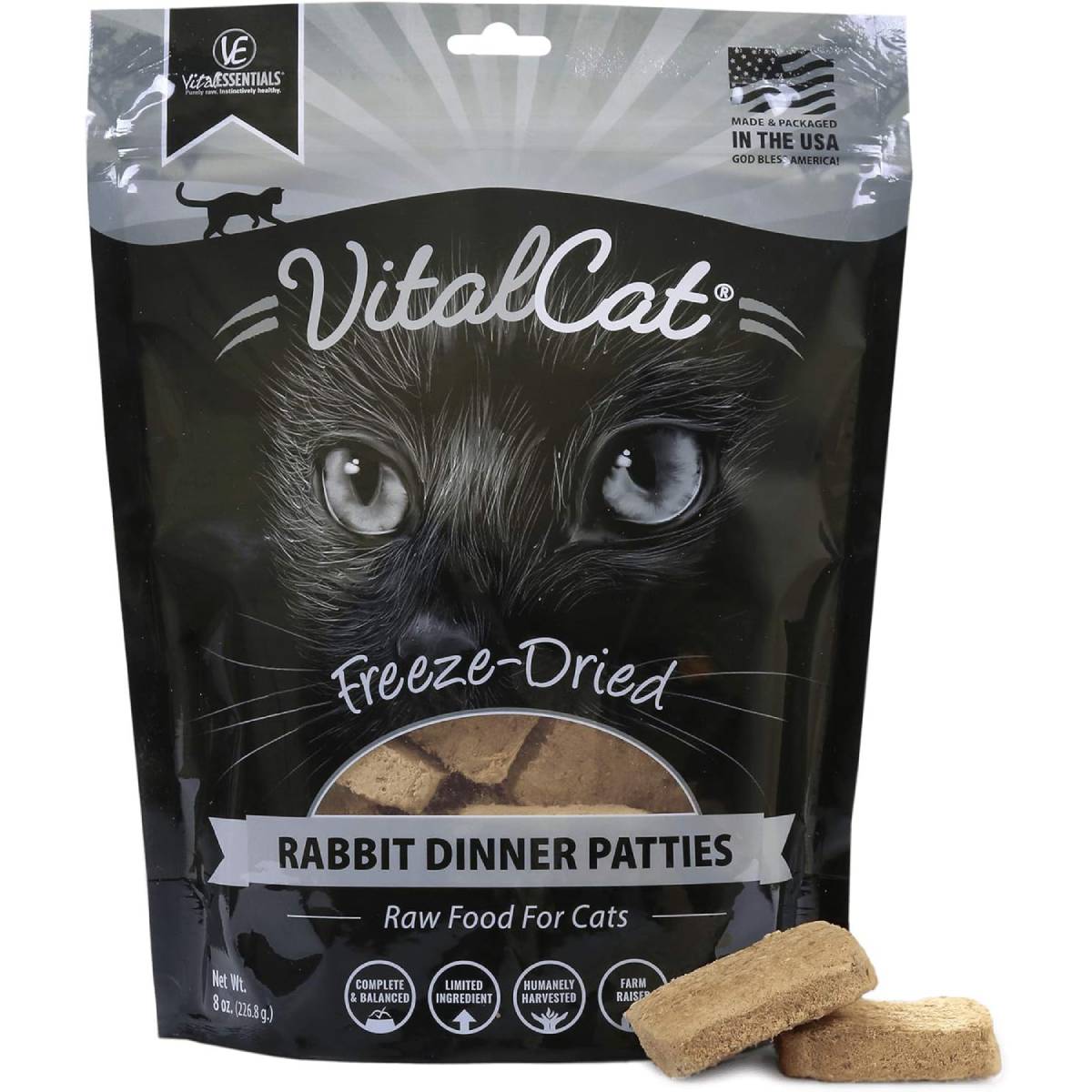
| Food type: | Freeze-dried |
| Primary protein: | Rabbit |
| Crude protein percent: | 60 |
| Size: | 8 ounces |
When you’re looking to get your cat’s IBD under control, you want to simplify their diet. Nothing is simpler than a freeze-dried rabbit recipe. Vital Essentials Rabbit Dinner Patties contains 60% protein, and you’ll struggle to find a recipe with fewer ingredients.
Since rabbit is a novel protein, it’s typically an excellent choice for cats with IBD. Vital Essentials only uses the best possible ingredients in its food, and that’s a win for you and your cat.
However, it’s also expensive and beyond the price range for many owners. When you pair that with the low fiber amount of 3%, it’s not hard to see why such a simple ingredient choice is not that popular.
- Rabbit is a great novel protein
- High protein amount
- Simple-ingredient recipe
- Only high-quality ingredients
- Expensive
- Low fiber amount of 3%
11. Hound & Gatos 98% Turkey & Liver Formula
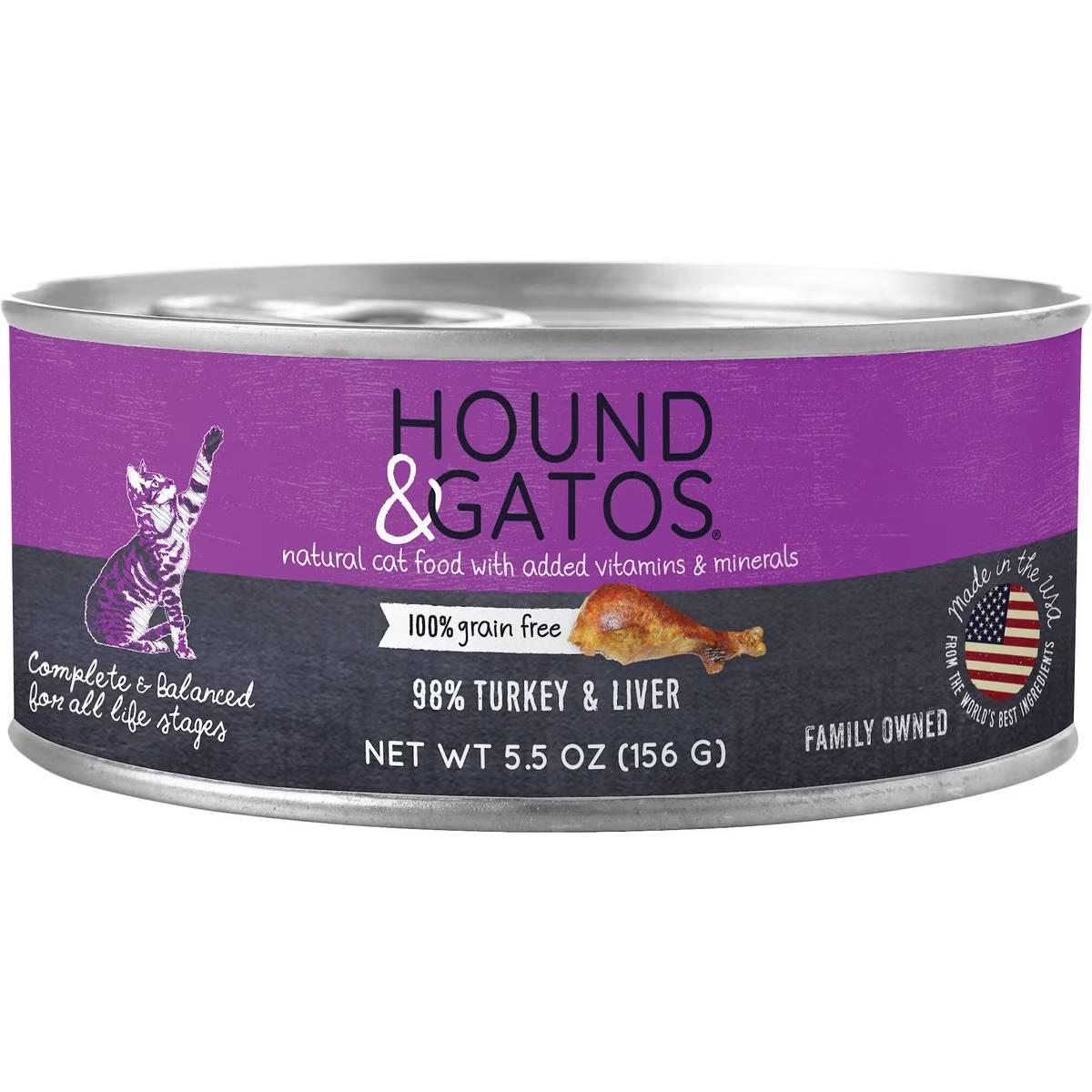
| Food type: | Wet |
| Primary protein: | Turkey |
| Crude protein percent: | 10 |
| Size: | 5.5-ounce case of 24 |
The Hound & Gatos 98% Turkey & Liver Formula is a wet food that can help get your cat’s IBD under control. It’s a simple ingredient recipe that comes packed with all the nutrients that your cat needs to thrive.
Not only can it help get their IBD under control, but it also is excellent for your cat’s coat. Cats love the food, and it makes mealtime a breeze. However, most cats will need multiple cans a day, and it’s already an expensive product. If you want to switch your cat to a wet-food diet, you’ll spend more in the long run.
- Great for your cat’s coat
- Simple-ingredient recipe
- Tons of helpful nutrients
- Cat-s love it
- Expensive
- Most cats need multiple cans per day
- Not the best protein for IBD

Buyer’s Guide: Selecting The Best Food for Cats With IBD
With so many excellent cat food brands, it can be hard to narrow down the best possible choice for your cat. That’s why we created this comprehensive buyer’s guide to walk you through everything that you need to know.
Picking a Protein
While we’d love to recommend a specific protein for you to feed your cat and help with their IBD, the truth is that each cat will respond differently to different protein sources.
Since you’re already noticing signs, it’s generally a good idea to switch your cat to a novel protein like duck or rabbit. From there, ensure that the food you’re using is a single-source protein. This enables you to narrow down the cause of a flare-up if one occurs.
But also keep in mind that while the protein is often a significant cause of the flare-up, there could be another ingredient in the food that’s causing the reaction, too. Try to stick with foods with a limited number of ingredients to help narrow down potential problem foods.
Switching Your Cat Food
Anytime your cat switches food, you can expect their stomach to react. This doesn’t mean the new food is the problem, but it can be frustrating for you and your cat. That is why you should always switch their foods slowly and give them time to adjust to their new food before jumping to any conclusions.
The last thing you want to do is jump from food to food when the only problem is that their stomach hasn’t had time to adjust to their new diet!
How Much Protein Does Your Cat Need?
It depends on the age of your cat, but ideally, your cat should get anywhere between 28% and 45% crude protein in their food. While aging cats can get by with less, 30% is the recommended minimum for cats of all ages.
Moreover, kittens should get at least 40% crude protein. They’re growing and need the extra protein to do it! You can give your adult cat more than 45% crude protein in their diet, but you must ensure that your cat works it off. You don’t want an overweight kitty because you’re giving them the wrong type of food!
Finally, keep in mind that wet foods work differently. Cats can eat more of it because it’s mostly moisture, so if the food contains 7.5% to 12.5% protein, you’re in good shape.
Ordering a Prescription Food
There are a few cat foods that you’ll need a prescription for. While that can seem daunting, once you’ve talked to your vet about it, it’s pretty simple. All you need to do through a site like Chewy is provide it with your vet’s contact information.
Chewy’s support team will reach out and do the rest! You can speed up the process by uploading a copy of the prescription on the site. As long as the prescription is active, you won’t need to do anything else to order it again!
So, ordering a prescription cat food is easier than you might think, and you can get a specifically formulated food that can keep your cat healthy.
Feeding your cat a high-quality diet is important for keeping them healthy and happy. But it goes beyond the food you choose; the dishes they use also matter. The Hepper NomNom Cat Bowl is our favorite for its unique, five-star design that protects from whisker fatigue and promotes good posture which also aids in better digestion. As an added bonus, it’s beautifully crafted and offers a modern take on the traditional cat bowl that fits seamlessly with all home stylings. Learn more about the NomNom by clicking here. At Catster, we’ve admired Hepper for many years and decided to take a controlling ownership interest so that we could benefit from the outstanding designs of this cool cat company! 

Final Verdict
If you’re still stressing out about which cat food to purchase to help with your cat’s IBD after reading these reviews, don’t overthink it. There’s a reason that Smalls Fresh Cat Food Cow Recipe is our top choice. It is sourced from a single protein and is created with all-natural ingredients and vitamins.
If you don’t have a vet you can contact, you can always try Blue Buffalo’s Wilderness Salmon Recipe. You don’t need a prescription; it’s incredibly affordable, and it’s a simple ingredient recipe with a protein that’s easy on the stomach. But don’t wait and hope for the best—get your cat food that will get their IBD in check!
Related Read:
- Hill’s Science Diet Cat Food Review: Recalls, Pros & Cons
- 10 Best Kitten Foods — Reviews & Top Picks
Featured Image Credit: mik ulyannikov, Shutterstock
Contents
- A Quick Comparison of Our Favorites in 2024
- The 11 Best Food for Cats With IBD
- 1. Smalls Cow Recipe (Fresh Cat Food Delivery) — Best Overall
- 2. Blue Buffalo Wilderness Salmon Recipe — Budget Buy
- 3. Purina Pro Plan Vet Diet Gastroenteric Formula
- 4. Dr. Elsey’s CleanProtein Chicken Formula — Best for Kittens
- 5. Royal Canin Veterinary Diet Selected Protein
- 6. The Honest Kitchen Turkey Recipe
- 7. Hill’s Prescription Diet z/d Skin Food Sensitivities Dry Cat Food
- 8. Merrick Limited Ingredient Diet
- 9. Stella & Chewy’s Absolutely Rabbit Dinner Morsels
- 10. Vital Essentials Rabbit Dinner Patties
- 11. Hound & Gatos 98% Turkey & Liver Formula
- Buyer’s Guide: Selecting The Best Food for Cats With IBD
- Picking a Protein
- Switching Your Cat Food
- How Much Protein Does Your Cat Need?
- Ordering a Prescription Food
- Final Verdict